
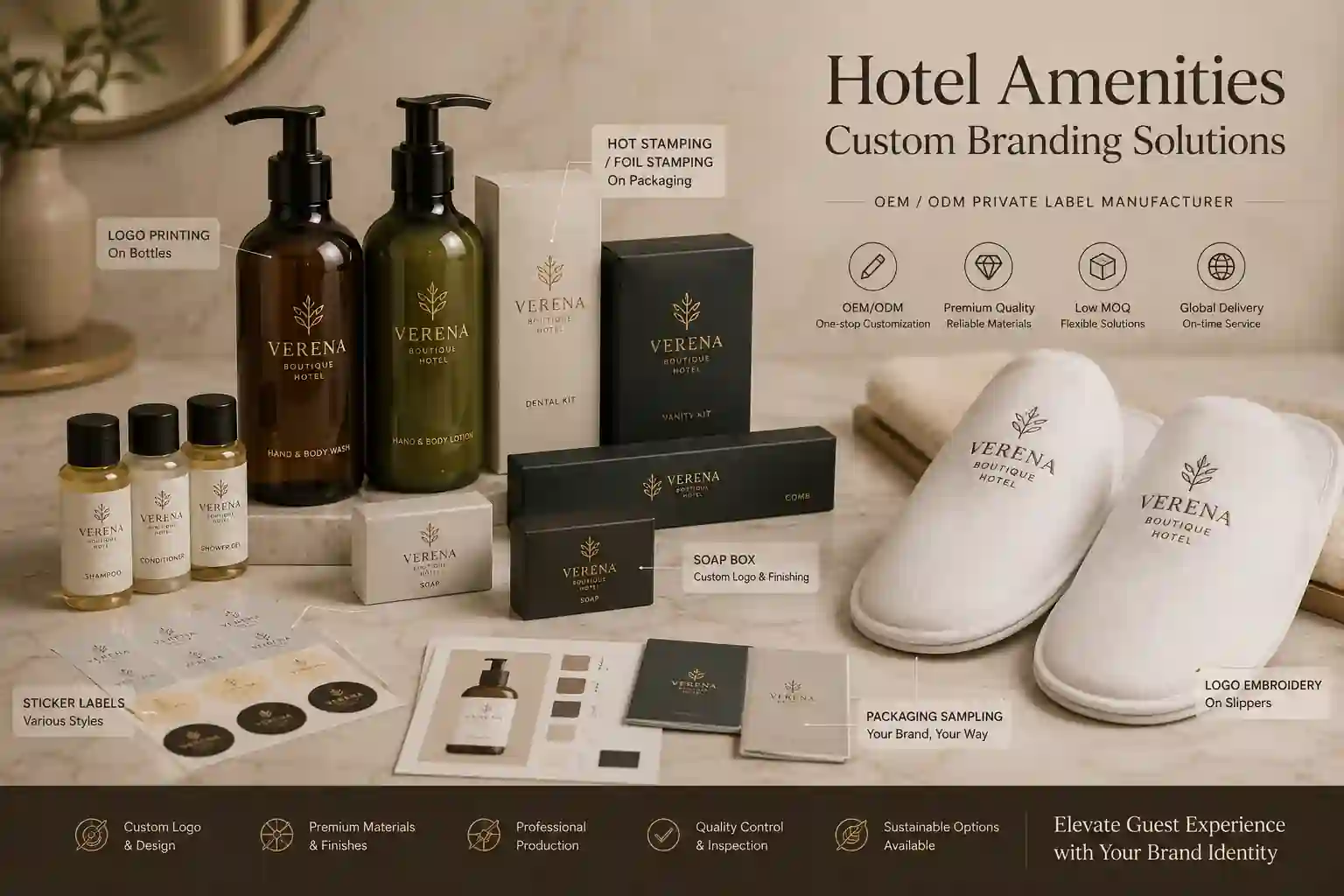
OEM and ODM are used loosely in sourcing conversations, and the difference matters for what you can change, who owns the design and what you are paying for. Here is what each term normally covers in hotel amenities.
The basic distinction
- OEM (original equipment manufacturer) — the product is manufactured to your specification and sold under your brand. You define the design, the materials and the artwork.
- ODM (original design manufacturer) — the manufacturer already has the design. You select from their range and apply your branding, sometimes with limited modification.
In practice most amenity programs sit between the two: an existing base product with a customised specification and your artwork applied. What matters is knowing which parts are yours to change.
What customization actually covers
When a supplier says the order is customizable, confirm which of these are included:
- Product level — material, size, weight, thickness, colour
- Formula level — for toiletries, the base composition and fragrance direction
- Branding level — logo placement, print method, label artwork, embossing
- Packaging level — bag, pouch, sachet, box, insert, carton marks
- Combination level — how items are grouped into sets
Product and formula changes usually carry a minimum order quantity because they require tooling or a dedicated run. Branding and packaging changes are typically more flexible.
What to confirm before appointing a manufacturer
- Where each item is actually made. A trading company may manufacture some lines and source others. Both are workable; knowing which is which tells you where to focus quality checks.
- Minimum order quantity per item and per customisation. These vary by item, so ask for the full matrix rather than one headline number.
- Sample and artwork approval steps. A defined sequence — artwork proof, physical sample, written sign-off — prevents most specification disputes.
- Who owns the tooling and artwork. If you paid for a mould or a printing plate, confirm in writing whether it stays with the manufacturer and under what terms.
- Reorder specification. Ask for the written spec sheet with the first order. It is the reference that keeps subsequent orders identical.
Commercial points worth agreeing up front
- Sample cost and whether it is credited to the order
- Payment terms and the milestone each payment is tied to
- Incoterm and who arranges freight
- Lead time, and the point at which a delay becomes a claim
- Inspection arrangement and defect handling after delivery
A note on exclusivity
If you are developing a private-label product and expect exclusivity, ask directly and get it in writing. Some manufacturers will agree for a defined market, product or volume; others will not. Assuming exclusivity you have not agreed is one of the more expensive sourcing mistakes.
Our customization page sets out the levels we work at, and our factory page covers supply capability. To discuss a specific project, send us your product list.